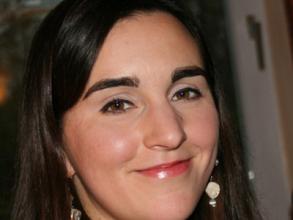
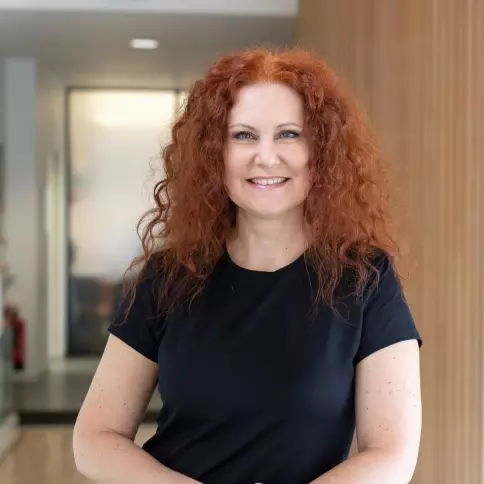
University of Oxford Mathematical Sciences alumni, Louise Thomas is co-founder of Air Aware Labs, a startup that provides personalised health insights from air pollution data. Louise and her co-founder, who holds a DPhil in air pollution and whom she met through the Zinc venture builder "Eliminating Environmental Threats to our Health", have a team of three part-time co-founders covering medical, tech and product, as well as five advisers. They are currently pre-revenue, with a product in the market and are raising pre-seed funding.
What is your background? What made you decide to become an entrepreneur?
After finishing my degree, I went into government - joining the fast stream at the Department for International Development. I worked for over two decades in foreign policy, including international economic policy and latterly working at the intersection of emerging technology and geopolitics. This role included supporting the creation of the first AI safety summit and gave me the excuse to get back to my academic background through taking a machine learning qualification. Combined with my work at community level on air pollution, I decided to take a new career path combining those passions.
What is your definition of entrepreneurship?
Having a vision, finding a gap, pursuing ideas with resilience and creativity, selling your ideas, building a community who cares, being ready to fail.
How and when did you know your idea was good enough to develop it?
My co-founder and I came with very different backgrounds but had the same insight into what was missing (yet now possible) in the world of air pollution. We applied for an innovate grant very early - the application was not good but the feedback did confirm that our idea was different and innovative! We then launched our product and saw fantastic pick up!
What would you say are the top 3 skills that needed to be a successful entrepreneur? Why?
Networking - it's important to offer your help as much as ask others.
Resilience - you will get far more no's than yes's.
Organisation - there are endless things to do and you need to stay on top of priorities and communicate these to stakeholders.
What is your favourite part of being an entrepreneur?
Meeting people who 'get it'. While well-placed challenge is great, it's also lovely to meet people, explain what you're doing and they just get it!
What individual, company or organization inspires you most? Why?
Tessa Clarke from Olio - so much resilience, support to others and sticking with an unusual business model.
If you had 5 minutes with the above individual/ company/organization, what would you want to ask or discuss?
How to navigate pivots and make an impact (both corporate and social) with an unusual business model.
What has been your most satisfying or successful moment in business?
Launching our product with Strava and getting such a fantastic response.
What would you say have been some of your mistakes, failures or lessons learned as an entrepreneur?
Trying to do everything - it's so important to prioritise a small number of avenues to pursue, even if you change that later. The most unexpected thing has been how much I've needed to learn about a huge range of business models in different sectors - still very much learning!
How have you funded your ideas?
A
stipend on Zinc and self-funding. We are 70% committed in current round, so hopefully this will soon change!
Are there any sector-specific awards/grants/competitions that have helped you?
The
Innovate clean air programme, even though we weren't successful.
If a new entrepreneur or startup came to you looking for entrepreneurship resources, where would you send them?
There is loads online so I would point them towards chats where they can share advice with others and make sense of the online resources. Also a wealth of incubators and accelerators to learn as you go. I also quite like podcast series such as
Masters of Scale.
What resources would you recommend for women?
There are loads of groups for female founders -
Hive Founders,
Female Founders Rise,
Alma... I am not one particularly for entrepreneurship books, but there are loads of them aimed at women / written by women too.
How do you think institutions such as the University of Oxford could better support women entrepreneurs?
As alumna I have struggled to find many groups beyond
EnSpire that help with that crucial networking
Do you have any advice for women who want to be entrepreneurs?
Do it! But also be ready to not make any money for a while, so do it at a time in your life when this is a reasonable prospect! And pursue an idea you really believe in, so you can get through the tough times.
Any last words of advice?
Believe in yourself!
You can keep up to date with Louise by following her on
LinkedIn.